HyperPlay
Three and a half years on a web3 game launcher. Product design and research in the design team, then front-end work on the same interface in the engineering team.
What I can showEmployed work, done inside teams. This is my part, not the whole project. The screens below are from the publicly released launcher.
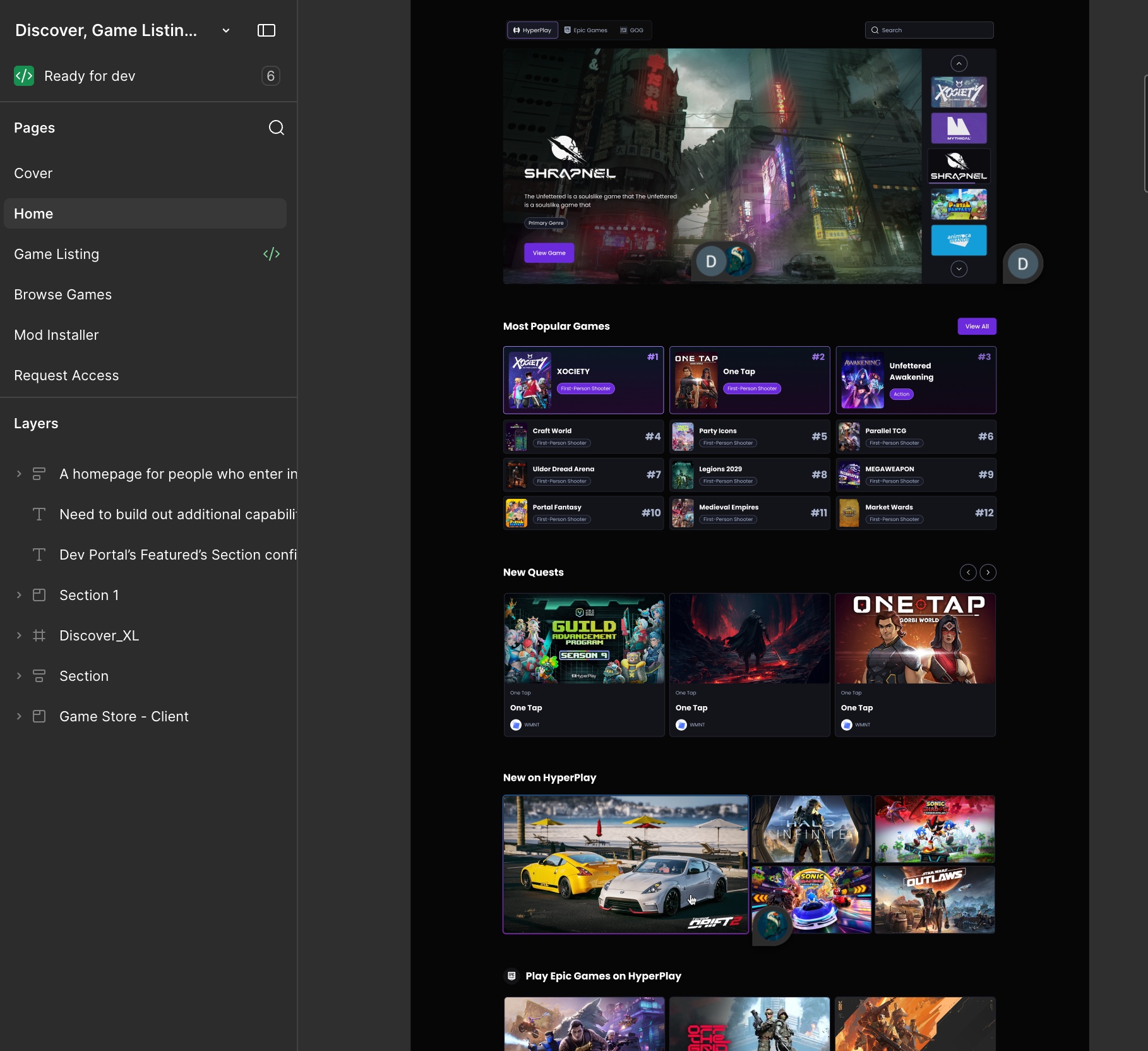
- Role
- Product Designer (2022—2025) → Front-end Developer (2024—2026)
- Team
- Design team, then engineering team — distributed across the US, Europe and LATAM
- Timeline
- 3 years 8 months
- Platforms
- Desktop game launcher, Web
- Stack
- Figma, TypeScript, React, Design tokens
HyperPlay is a game launcher for web3 games, built by a team spread across the US, Europe and Latin America. I joined the design team in 2022 and stayed almost four years.
In late 2024 I moved to the engineering team as a front-end developer on the same product, working in TypeScript and React. I wrote all of it by hand — this was before I used AI for any of my work.
Make a web3 game launcher that someone who has never used web3 would trust and find easy to use.
- Players are not only playing — they earn and trade items, so a confusing screen costs more than usual
- Most of the audience we wanted had never used a web3 product
- The launcher is only worth using if studios choose to host their games on it
- Desktop client and website, signed in and signed out, desktop and mobile
Scope, in my own words.
Research and interviews
Ran user research and interviews, and turned the findings into flows and prototypes the team could review before anything was built.
Product design for the launcher
Flows, screens and interactive prototypes — the store, the game pages, quests and the library.
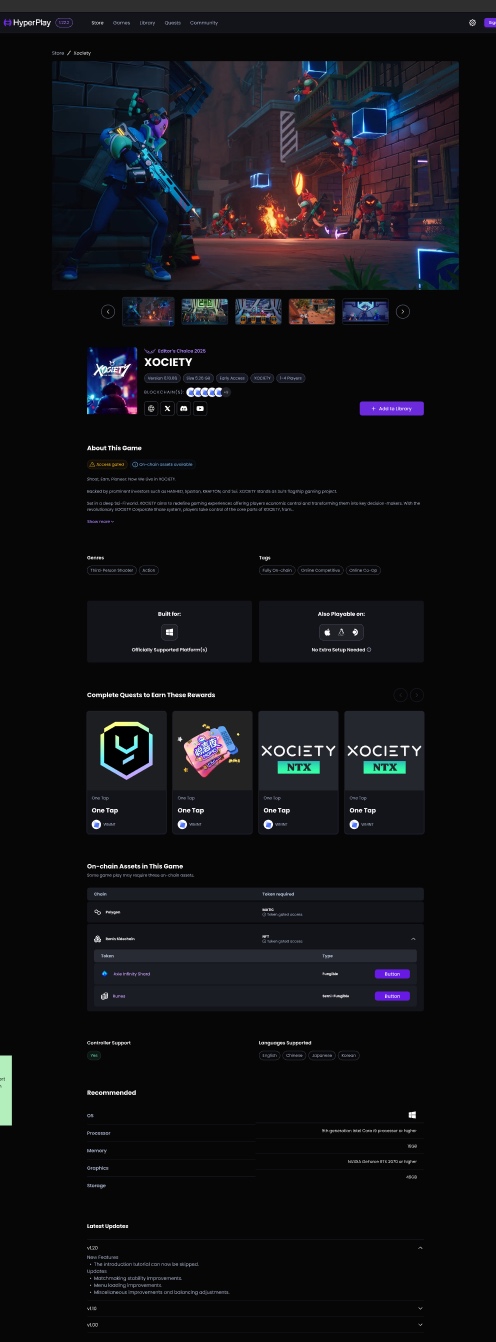
The design system
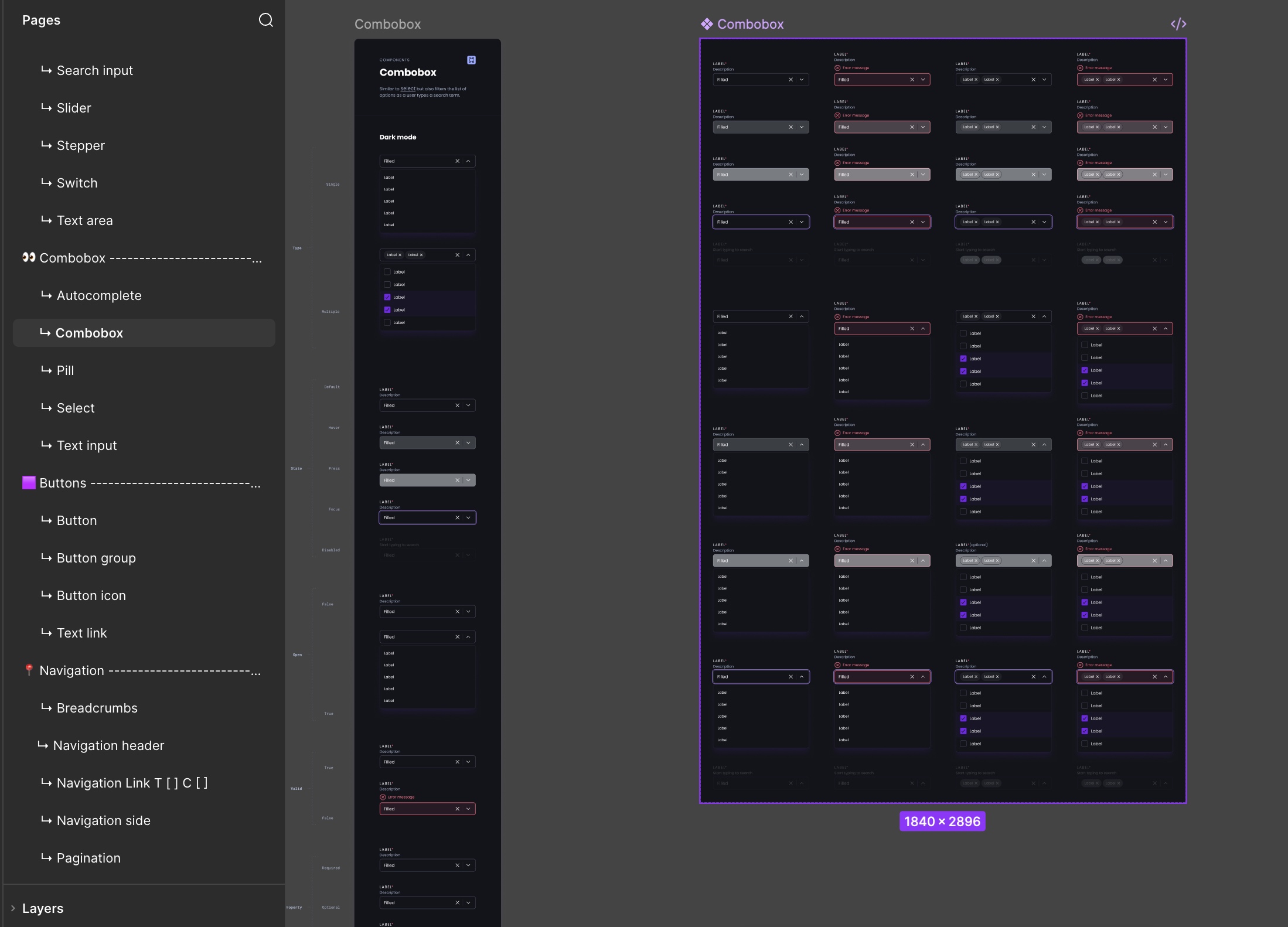
Within the design team I was responsible for the design system: token architecture, component library and documented states, kept usable by the engineers consuming it.
Front-end in the engineering team
TypeScript and React on the launcher interface, alongside the rest of the engineering team. No AI in any of it.
Content and player support
For over a year I also tested games and troubleshot with players and game developers.
The findings that moved the design.
We interviewed game developers, not only players
The design team ran interviews with game creators about the problems they had — distribution, reaching players, and what they needed from a launcher. The launcher only works if the games are on it, so the developer side had to be designed for as deliberately as the player side.
Trust was the thing we were short of
New players were being asked to use a launcher where items have real value, in a category most of them associated with risk. Being easy to use was not enough on its own; the interface had to look like something you could leave your account in.
Problem, decision, and why it was the right trade.
Designed for two audiences at once
- Problem
- A launcher with no games is worth nothing, and the studios deciding whether to publish on it had their own problems — distribution, visibility, reaching players.
- Decision
- We treated game developers as users too, interviewed them about those problems, and designed the launcher around what they needed as well as what players needed.
- Why it held
- It changed what got built. The developer side was the half nobody else was asking about.
Built it for people who had never touched web3
- Problem
- The people we most wanted to reach were unfamiliar with web3, and the category's reputation meant a wrong-looking screen would end the session.
- Decision
- The launcher had to read as a games launcher first, and earn trust before asking anyone to approve anything.
- Why it held
- Someone who does not understand what an action is doing will not take it, however good the game library is.
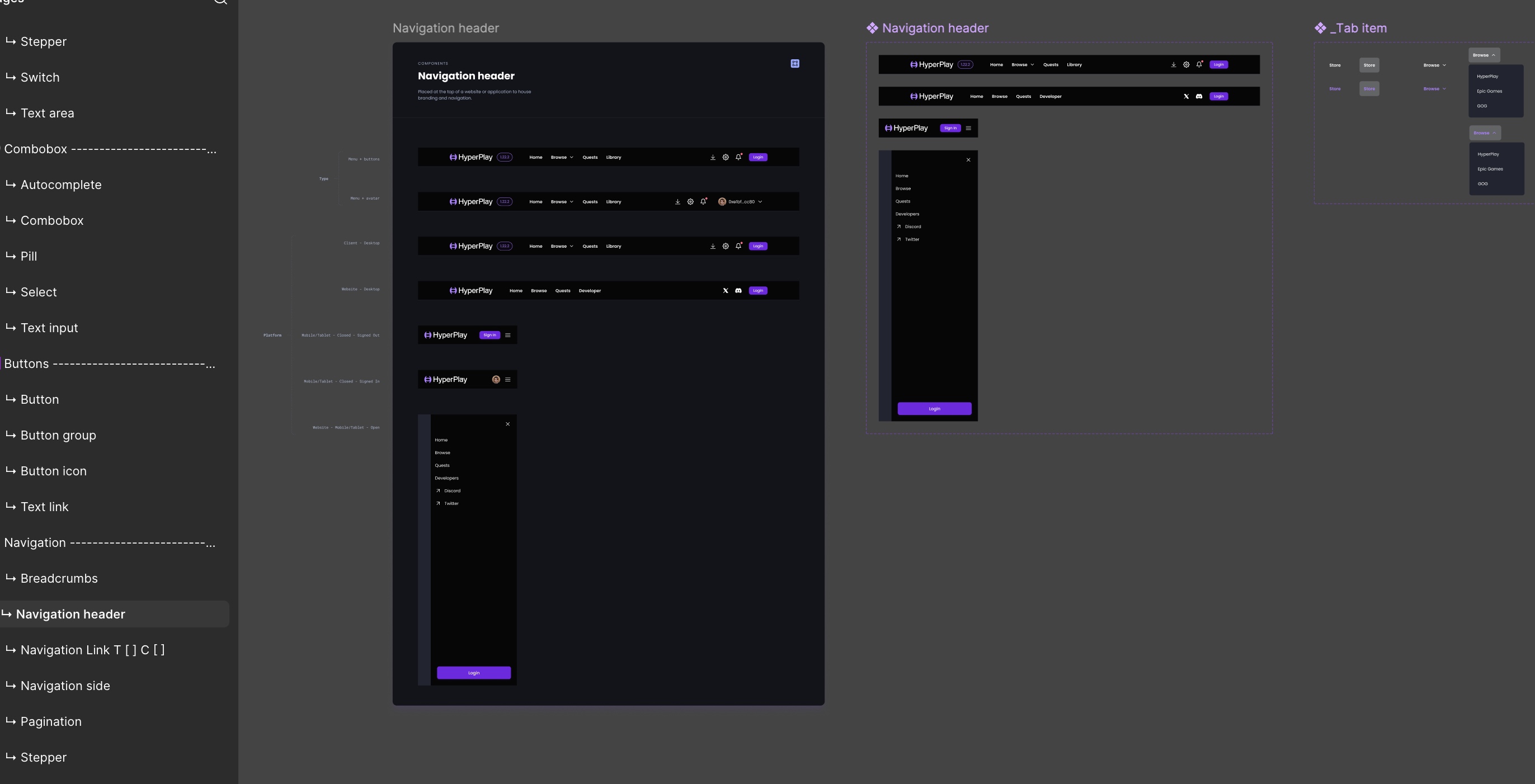
One header, five platform states
The launcher runs as a desktop client and as a website, signed in and signed out, on desktop and on mobile. The navigation header covers all of it as one component, with the platform as a property.
The same craft is public in my open-source work on Heroic Games Launcher, where every pull request and review conversation can be read on GitHub.
- On the same product
- 3y 8m
- Teams — design, then engineering
- 2
- AI in the code I wrote here
- 0
Heroic Games Launcher
I ran the validation research that decided this was worth building. It now has 500k+ monthly users, and I still design and ship its interface.